
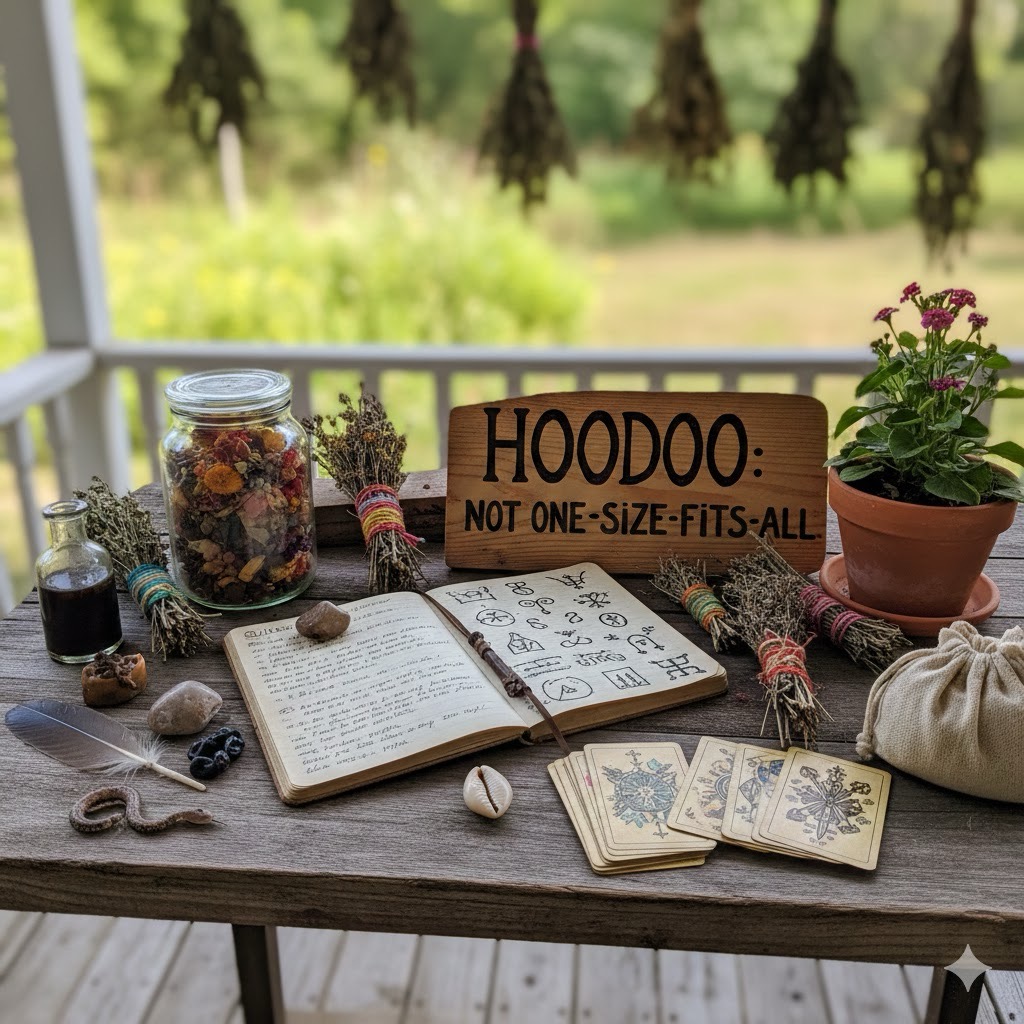
Hoodoo is often misunderstood as a monolithic spiritual practice, when in reality, it is a diverse and rich tapestry of beliefs and rituals that vary greatly across regions and individual practitioners. This spiritual system, deeply rooted in African traditions, is shaped by the unique historical and cultural experiences of different communities. It evolves and adapts, allowing each practitioner to carve out their own path in this spiritual journey.
A Beautiful Mosaic of Practices
One of the most defining aspects of Hoodoo is that it is not a cookie-cutter approach to spirituality. Depending on where you find yourself geographically, the practice can differ significantly. For example, Hoodoo in the Southern United States, particularly in Louisiana, might heavily incorporate elements of Voodoo and Cajun folklore, reflecting the region’s unique cultural blend. Practitioners may use specific local herbs and perform rituals influenced by the vibrant Creole culture, often working with the spirits of the land and their ancestors in a way that feels alive and personal.
Hoodoo practices in the Carolinas may lean more towards rootwork, where practitioners use roots, herbs, and personal charms to create amulets or perform healing rituals. The Gullah people, for instance, have preserved many African traditions, combining them with elements of Christianity in a way that’s distinct to their coastal communities. Here, rituals often emphasize the relationships with ancestors, employing songs and stories that carry the wisdom of generations.
Regional Variations
The beauty of Hoodoo lies in its regional diversity. In some areas, you might find practices influenced by local flora, where practitioners rely on the indigenous plants of their region to create remedies and healing balms. For example, in Mississippi, specific herbs might be used that are not found in other regions, while those in Texas may incorporate elements of Native American spirituality, reflecting the unique history of the land on which they live.
In cities like Detroit or Chicago, where large populations of African Americans have settled, Hoodoo takes on new life. Practitioners here might adapt their rituals based on urban living, finding ways to connect with their ancestors and the spiritual world amidst the hustle and bustle of city life. The rituals could involve more urban-centric elements, using everyday objects in creative ways to honor their heritage while living in a contemporary world.
The Heart of Hoodoo: Ancestor Veneration
At the core of Hoodoo, no matter the regional variations, is the profound practice of ancestor veneration. Honoring one’s ancestors is quintessential in Hoodoo, creating a bridge between the past and present. Each practitioner is encouraged to build a relationship with the spirits of their forebears, looking to them for guidance, protection, and strength.
Setting up an ancestor altar becomes a powerful practice. It’s a personal space where you can connect with those who came before you, offering them food, drink, and items that are meaningful to them. The act of venerating ancestors fosters a sense of belonging and continuity, reminding practitioners that they are part of a larger tapestry of life that spans generations.
The ways of honoring ancestors may differ from person to person. Some might choose to leave offerings daily, while others may engage in more elaborate rituals during certain times of the year, such as during the harvest or at the New Year. This flexibility embraces the notion that there is no single “right” way to practice; rather, it’s about what resonates personally and culturally.
A Personal Journey
Ultimately, Hoodoo is an invitation to explore and express your spirituality in a way that feels authentic to you. Whether you are drawn to herbalism, divination, or ritual work, your practice should reflect your identity, experiences, and the wisdom of your ancestors. Embrace creativity in how you connect with your heritage—your Hoodoo practice can be a reflection of who you are, woven together with the threads of your community’s beliefs and histories.
It’s essential to approach Hoodoo not just as a set of spells or rituals to be performed, but as a deeply spiritual journey that is as unique as each individual. With a focus on ancestor veneration and personal connections, traditional practices can be adapted and infused with modern sensibilities, creating a vibrant, living tradition that honors the past while embracing the future.
In this beautiful mosaic of practices, remember that your journey in Hoodoo is yours alone. Foster a strong connection to your ancestors, learn from the traditions around you, and most importantly, let your intuition lead the way. The evolution of Hoodoo is a celebration of spirituality that invites all to partake in its richness and diversity, ensuring that it remains a dynamic and personal practice for generations to come.
Thanks for taking time to read!
Love and Hugs
B🐝